

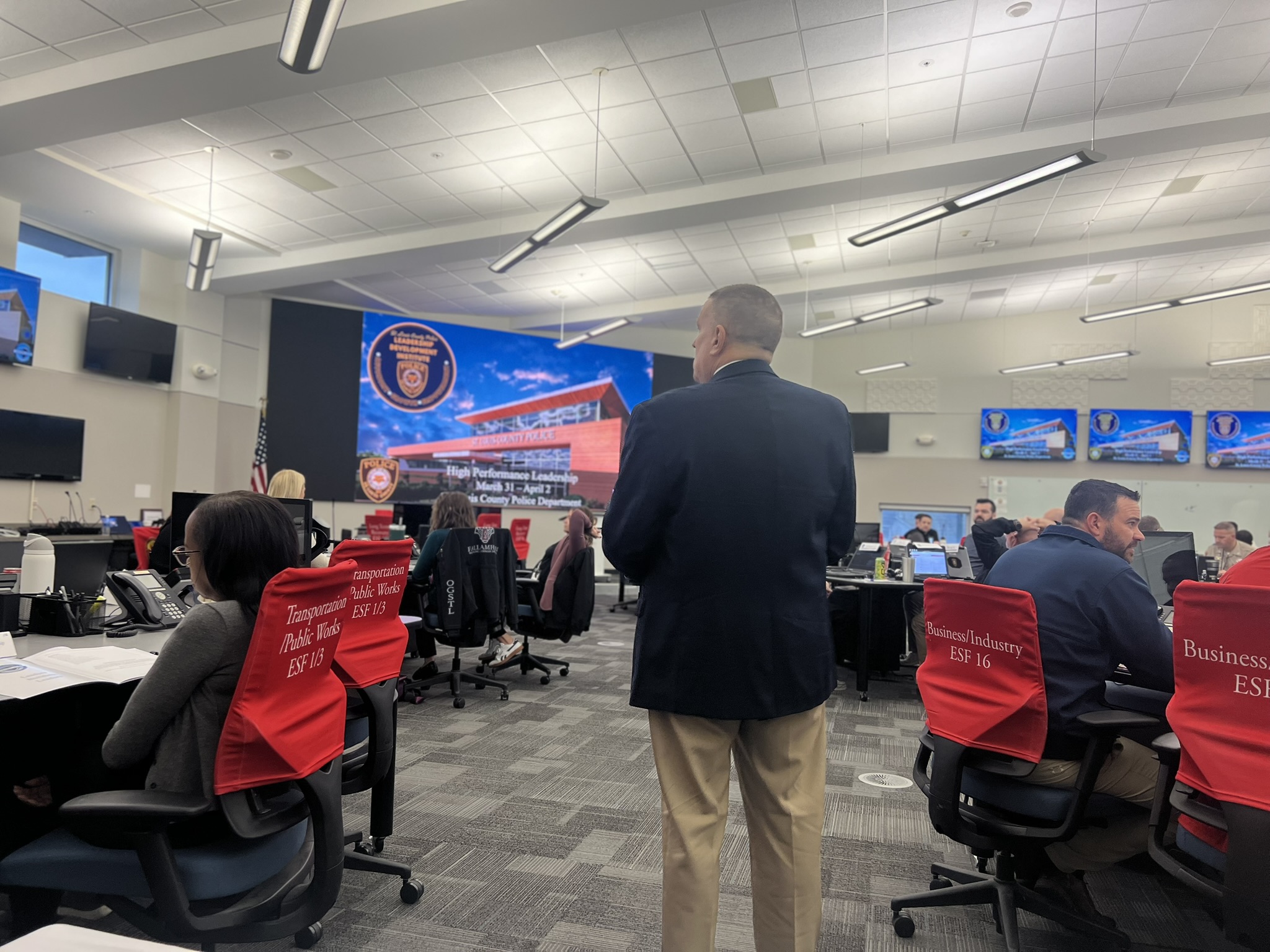
Building a Law Enforcement
Leadership Development Program
The single greatest problem in law enforcement today is our failure to recognize the enormous importance of leadership and our unwillingness to fully commit to developing the leadership skills of our people.
One large industry study found an average return of $7 for every $1 invested in leadership development (BetterManager & The Fossicker Group, 2023). Reported returns ranged as high as $11 for every $1 invested.
Much of the private sector understands this.
Much of government does not.
Our organizations should be leadership factories. Leadership development should begin with new personnel and should never end. Making it an agency obsession may sound extreme, but it is probably closer to where we need to be. Imagine the possibilities if strong leaders existed at every level of the organization, leaders who understood that part of their responsibility was not only to perform at a high level themselves, but to lift the people around them and prepare the next generation to lead even better.
Why Law Enforcement Agencies Need Leadership Development Programs
Law enforcement is people. Leadership is people.
Our personnel need to be developed, challenged, supported, and prepared to lead, long before they receive a new rank or title. Leadership development should not begin with promotion, and it should not end after a single supervisory course. It should be an ongoing investment throughout an officer’s career.
The strength of a law enforcement agency is ultimately determined by the quality of leadership found at every level of the organization. When agencies intentionally develop leaders, they build stronger supervisors, healthier workplace environments, more capable teams, and a deeper bench of people prepared to lead the organization into the future.
Leadership Development Should Begin Before Promotion
Leadership development should not begin with stripes, bars, or a new title.
Our people routinely influence coworkers, train newer employees, serve as officers-in-charge, solve problems, make decisions, and affect workplace culture before ever becoming formal supervisors.
Agencies can identify and develop these emerging leaders early.
Providing developmental opportunities before promotion allows employees to practice leadership behaviors, better understand supervisory responsibilities, and determine whether formal leadership is a path they truly want to pursue.
It also allows the organization to develop leaders instead of simply selecting supervisors.
Define the Leadership Your Organization Wants
Before creating classes, mentoring programs, or leadership academies, an agency should first determine what effective leadership looks like within its organization.
What behaviors should supervisors demonstrate? How should leaders communicate with employees? How should they address performance? How should they develop their people? What values should guide decisions? What type of workplace environment should leaders create?
Defining these expectations creates a foundation for the entire leadership development program.
Without clearly defined leadership expectations, different supervisors may receive very different messages about what good leadership looks like.
Develop Leaders at Every Level
Leadership development should change as an employee’s responsibilities change.
Line Officers and Informal Leaders
Development can focus on professionalism, communication, initiative, accountability, teamwork, decision-making, emotional intelligence, and positive influence.
Officers-in-Charge and Aspiring Supervisors
Development can expand into leading peers, resolving conflict, making supervisory decisions, setting expectations, accepting responsibility, and understanding the transition from officer to supervisor.
First-Line Supervisors
Development should include coaching, employee performance, accountability, communication, decision-making, workplace culture, conflict management, and developing other employees.
Command and Executive Leaders
Development increasingly involves organizational vision, strategy, culture, change management, succession planning, executive decision-making, and creating systems that develop the next generation of leaders.
A strong program recognizes that leadership development is not one curriculum delivered to everyone. Development should evolve with responsibility.
Use More Than Leadership Training
Leadership classes can provide knowledge, concepts, tools, and new perspectives, but classroom training alone rarely produces sustained leadership development.
Agencies should consider combining formal training with other developmental opportunities, including:
- Mentoring
- Coaching
- Acting-supervisor assignments
- Rotational assignments
- Committee and project leadership
- Leadership reading programs
- Case studies and tabletop discussions
- Leadership roundtables
- Self-assessment
- Performance feedback
- After-action reviews
- Conferences and external training
- Opportunities to teach or present
- Cross-unit experiences
The strongest leadership development programs create repeated opportunities to learn, practice, reflect, and improve.
Build Mentoring and Coaching Into the Process
Employees benefit from having experienced leaders who can provide perspective, feedback, and guidance. Mentoring can help developing leaders understand organizational expectations, learn from the experience of others, and think through challenges before encountering them alone.
Coaching should also become part of everyday supervision.
Rather than addressing employees only when something goes wrong, supervisors can use routine conversations, assignments, and feedback as opportunities to develop judgment, confidence, and leadership ability.
Leadership development becomes far more powerful when developing others is viewed as part of every supervisor’s job.
Create Developmental Leadership Opportunities
People develop leadership ability partly by having opportunities to lead. Agencies can intentionally create these opportunities without immediately promoting someone.
Employees might lead a project, coordinate an initiative, serve as an officer-in-charge, mentor a newer officer, present training, participate in a committee, conduct research, or help solve an organizational problem.
These assignments provide experience while allowing supervisors to observe how employees communicate, make decisions, handle responsibility, and influence others.
Developmental assignments also create opportunities for feedback—one of the most important components of leadership growth.
Connect Leadership Development to Succession Planning
Succession planning should involve more than identifying who might fill the next vacant position. It should involve continuously developing a pool of employees capable of assuming increasing levels of responsibility. A leadership development program allows agencies to prepare people before vacancies occur.
When development begins early and continues throughout an employee’s career, organizations become less dependent on finding the right person at the last minute.
Instead, they create a deeper bench of prepared leaders.
Make Leadership Development Continuous
One of the biggest mistakes organizations can make is treating leadership development as something employees complete.
Attend a supervisory school. Receive a certificate. Return to work. Done.
Leadership does not work that way.
Responsibilities change. Organizations change. Employees change. Communities change. Leadership challenges change. Development should therefore continue throughout a leader’s career.
Agencies can reinforce leadership development through periodic training, mentoring, leadership discussions, reading, coaching, developmental assignments, conferences, assessments, and opportunities to learn from both successes and mistakes.
The objective should be continuous growth—not completion.
Measure More Than Attendance
The success of a leadership development program should not be measured solely by how many employees attended training. Agencies should also consider whether leadership behavior is changing.
Are supervisors communicating more effectively? Are employees being developed? Are problems addressed earlier? Are emerging leaders being identified? Are employees better prepared when promoted? Is the organization building leadership capacity at multiple levels?
Attendance is easy to measure. Leadership development requires looking at what happens after the class is over.
Start Small and Build Over Time
A leadership development program does not need to begin as a large academy or expensive initiative.
An agency can start with several manageable components:
- Define leadership expectations.
- Identify employees interested in development.
- Provide foundational leadership education.
- Create mentoring opportunities.
- Give employees opportunities to lead.
- Hold periodic leadership discussions.
- Provide feedback following developmental assignments.
- Build additional levels of development over time.
What matters most is that leadership development becomes intentional.
A modest program that continues to grow can be more valuable than an ambitious initiative that disappears after a year.
Build Leaders Before You Need Them
Organizations will always need supervisors, commanders, mentors, decision-makers, and people capable of influencing others in a positive direction.
The question is whether those leaders will be developed intentionally or left largely to chance.
A law enforcement leadership development program creates a deliberate process for identifying potential, building capability, providing experience, and preparing people for greater responsibility.
The strongest organizations do not begin looking for leaders when a position becomes vacant.
They have been developing them all along.
Return to the Law Enforcement Leadership Development Hub