
Law Enforcement Leadership Development
Effective law enforcement leadership does not begin with a promotion, and it should not end when a leadership class is over. Leadership development is an ongoing process that includes training, experience, mentoring, coaching, self-reflection, feedback, education, and opportunities to lead.
The Leading Blue Law Enforcement Leadership Development Resource Center is designed to help line personnel, aspiring supervisors, current leaders, and law enforcement agencies strengthen leadership at every level.
Whether you are preparing for your first leadership opportunity, transitioning into supervision, developing others, or building a leadership development process within your agency, the resources below are designed to provide practical guidance you can put to work.
 What Is Law Enforcement Leadership Development?
Leadership training and leadership development are related, but they are not the same thing.
Leadership training generally refers to a specific learning experience—a class, seminar, workshop, academy, conference, or other structured program.
Leadership development is broader.
It is the continuing process of developing the knowledge, judgment, behaviors, perspective, and skills needed to lead effectively. Formal training can be an important part of that process, but leadership is also developed through experience, mentoring, coaching, reading, feedback, observation, self-assessment, and opportunities to take on greater responsibility.
Leadership training is an event. Leadership development is a process.
The strongest leaders continue that process throughout their careers.
12 Commandments of Leadership
Leadership does not need to be complicated, but it does require high standards. Leading Blue’s 12 Commandments of Leadership distills our core leadership philosophy into twelve practical principles for developing people, building strong teams, maintaining standards, communicating effectively, recognizing excellence, and continuing to grow as a leader.
Use it as a quick reference, discussion guide, briefing-room handout, or reminder of the responsibilities that come with leadership.
Download the 12 Commandments of Leadership
Leadership Development Should Begin Before Promotion
Too often, leadership development begins after someone receives stripes, bars, or a new title. By then, an important opportunity has already been missed.
Officers begin influencing coworkers, making decisions, setting examples, solving problems, training others, and contributing to workplace culture long before they receive formal supervisory authority.
Leadership development can and should therefore begin at every level of an organization.
Line officers can develop communication, judgment, accountability, initiative, emotional intelligence, and influence. Officers-in-charge and acting supervisors can gain experience leading peers. Aspiring supervisors can begin preparing for the responsibilities that accompany promotion before they are handed those responsibilities.
If a member of your team is promoted and is deathly afraid of standing at the podium to give a shift briefing to her new squad, you failed her. If you had prepared her, she would have given a briefing a hundred times as a senior member of your team.
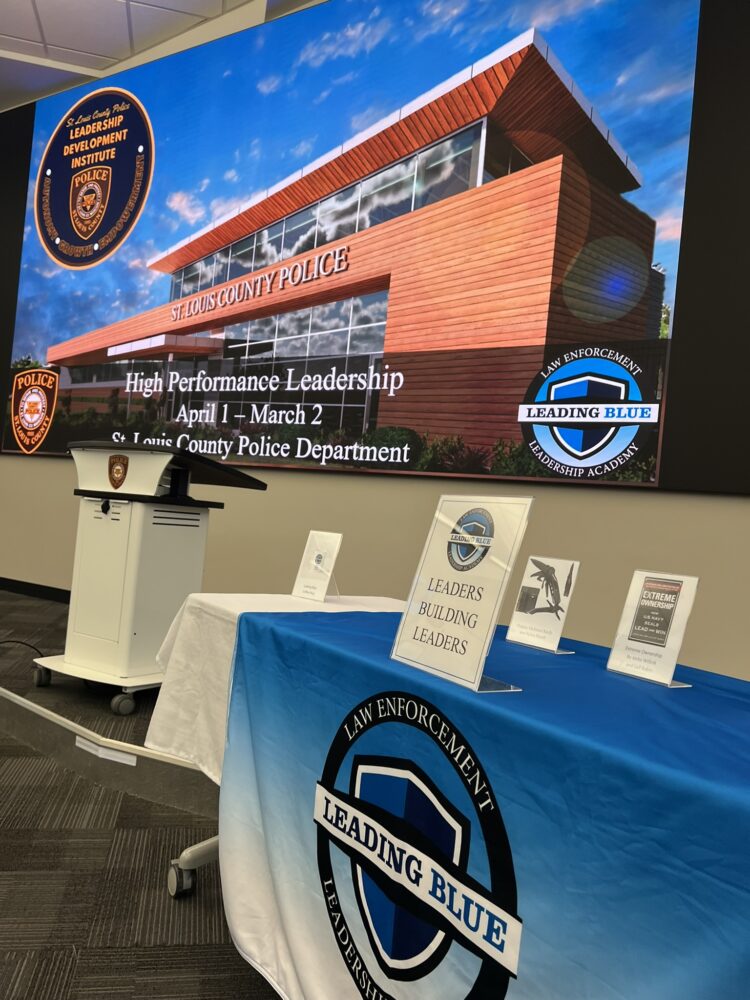
Developing leadership earlier creates better-prepared supervisors and a stronger leadership pipeline for the organization. As we repeatedly preach in our training, “Leaders Building Leaders!”
Leadership Development for New Supervisors
Promotion to first-line supervisor is one of the most significant transitions in a law enforcement career.
A newly promoted supervisor must often move from being a peer to being responsible for setting expectations, addressing performance, making difficult decisions, coaching employees, resolving conflict, communicating organizational priorities, and creating an environment in which others can succeed.
Technical competence alone does not prepare someone for those responsibilities.
Intentional leadership development can help new supervisors better understand their role, avoid common early mistakes, establish credibility, communicate effectively, and begin developing their own leadership identity.
Explore Leadership Development for New Supervisors
Leadership Without Rank in Law Enforcement
Leadership is not limited to people who hold supervisory rank.
Every law enforcement organization has officers who influence others, set standards, teach coworkers, solve problems, help newer officers, and contribute to the tone and culture of the workplace.
Officers-in-charge, field training officers, detectives, instructors, senior officers, aspiring supervisors, and informal leaders all have opportunities to lead.
Developing leadership skills before promotion benefits both the individual and the organization. It allows future supervisors to begin practicing leadership behaviors before they are formally responsible for leading others.
Explore Leadership Without Rank →
Law Enforcement Leadership Development Resources
No single class, book, organization, or leadership philosophy contains everything a developing leader needs.
Effective leadership development involves continually seeking new ideas, perspectives, research, experiences, and opportunities to grow.
Leading Blue’s leadership development resources bring together practical tools developed by Leading Blue along with selected resources from respected law enforcement, government, professional, and leadership organizations.
Resources may include:
- Leadership guides and downloadable PDFs
- Government publications and research
- Law enforcement leadership organizations
- Leadership development programs
- Recommended articles and studies
- Books and reading recommendations
- Videos, podcasts, and other learning resources
- Tools for supervisors and aspiring leaders
Building Leadership Development Into a Law Enforcement Agency
Strong leadership development should not depend entirely on an employee’s personal initiative.
Law enforcement agencies can intentionally create environments that develop leaders throughout an employee’s career.
Formal leadership training is one component, but agencies can also use mentoring, coaching, developmental assignments, acting-supervisor opportunities, succession planning, structured feedback, reading programs, internal leadership discussions, and opportunities for employees to solve organizational problems.
The objective is not simply to prepare someone to pass a promotional examination.
It is to create a continuing pipeline of employees who are increasingly prepared to lead people, teams, units, and eventually organizations.
Explore Building a Law Enforcement Leadership Development Program
Leadership Development at Every Level
Leadership development should evolve as responsibilities increase.
Line Officers
Development may focus on professionalism, communication, judgment, initiative, accountability, teamwork, influence, and understanding how individual behavior affects the workplace.
Officers-in-Charge and Aspiring Supervisors
Development begins shifting toward decision-making, leading peers, handling conflict, setting expectations, accepting responsibility, and understanding the role of a supervisor.
New and Current Supervisors
Leadership development expands to coaching, performance management, accountability, employee development, communication, team effectiveness, workplace culture, and balancing organizational and employee needs.
Command and Executive Leaders
Development increasingly involves vision, strategy, organizational culture, succession planning, change management, leadership development of others, and creating systems that allow the organization to perform effectively beyond the tenure of any individual leader.
Leadership development should never be viewed as something that is completed.
As the responsibility changes, the development must continue.
Free Law Enforcement Leadership Development Tools
Leading Blue continues to develop practical leadership resources that agencies and individual officers can use as part of their professional development.
Resources available through this section may include guides for:
- New supervisors
- Officers-in-charge and acting supervisors
- Aspiring supervisors
- Line officers and informal leaders
- Coaching and developing employees
- Building stronger workplace environments
- Leadership self-assessment and development planning
These resources are intended to complement—not replace—formal leadership training, mentoring, experience, and continuing professional development.
Explore Law Enforcement Leadership Resources
Continue Your Leadership Development
Leadership development is ultimately both an individual and organizational responsibility.
Individuals must remain willing to learn, seek feedback, challenge themselves, and take advantage of opportunities to grow. Organizations must create opportunities for employees to practice leadership, receive guidance, develop new skills, and prepare for increasing levels of responsibility.
Explore the area most relevant to where you are in your leadership journey:
Leadership Development for New Supervisors
Practical guidance and resources for officers transitioning into their first supervisory roles.
Leadership Without Rank
Leadership development for officers-in-charge, aspiring supervisors, informal leaders, and officers who want to make a greater impact without relying on rank.
Law Enforcement Leadership Resources
Free guides, publications, research, programs, organizations, and outside resources for continued leadership development.
Building a Law Enforcement Leadership Development Program
Ideas and strategies for agencies seeking to develop leaders intentionally throughout their organization.
Leadership is not something we suddenly acquire when we are promoted. It is something we develop over time—and something the best leaders continue developing throughout their careers.
Inquire About Bringing Leading Blue to your Agency or Upcoming Classes